Dune Explains Too Much, Which Is Exactly Why It Works

Why is Dune so popular? Because under all the sandworms and sacred bloodlines, it is family stress with better robes.
If you have ever sat through a family meal where one aunt knows too much, one uncle is nursing an ancient grudge, and nobody has checked whether the soup is safe, congratulations.
You understand Dune.
Dune looks enormous from the outside. Desert planets. Sacred bloodlines. Sandworms large enough to make a ferry look shy. People standing in grave little rooms, speaking as if every sentence must pass inspection before lunch.
That size is part of the appeal, of course. The films look magnificent. The books have the density of a tax form raised by monks. Dune: Prophecy brings cloaks, dynasties, secret tests, school politics, and women making eye contact with the force of a locked door.
But the real reason people like Dune is smaller and much funnier.
Dune makes the end of civilisation feel like a household problem.
Every great house behaves as if the universe is a family group chat where nobody can leave. The Atreides are trying to be noble in a room full of knives. The Harkonnens enter every situation with the social grace of a damp cellar. The Bene Gesserit have turned long-term planning into a religion with excellent posture.
Prophecy, in Dune, arrives with paperwork.
It has lessons. Records. Bloodlines. Political strategy. A woman in a dim corridor deciding what somebody’s grandchildren may be allowed to become. The mystical part is real, but it keeps arriving beside the administrative part, which is very funny if you have ever filled in a form and wondered whether a medieval order of space nuns designed it.
This is why Dune can explain so much and still work.
A simpler space opera gives you a powerful sisterhood. Dune gives you the sisterhood, the training, the breeding plan, the whispered doctrine, the public face, the private fear, and the sense that three people in a corridor have already discussed your marriage, your children, and your usefulness as a future cautionary tale.
Too much explanation becomes part of the pleasure.
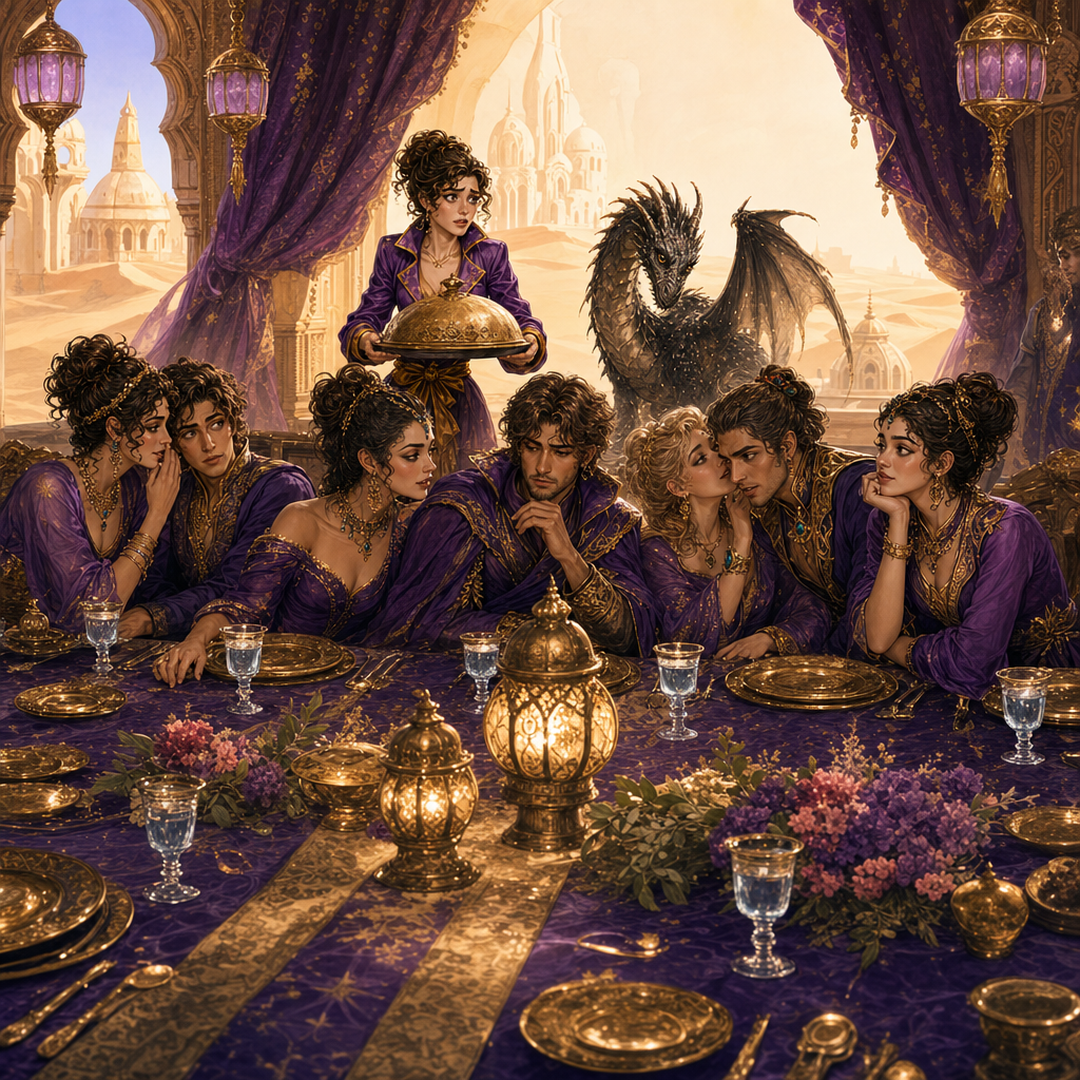
You are handed names inside names. A prophecy has footnotes. A dinner has six political meanings. A glass of water can make a room sit up straighter. A hallway conversation may rearrange the next thousand years, provided everyone keeps their voice down and no one blinks first.
That is why Dune: Prophecy fits so neatly into this world. It understands the best Dune scenes are often people in formal clothes having a quiet conversation that should, by all rights, require emergency chairs.
The universe may be massive, but the danger is usually close enough to pass the salt.
There is also the matter of lunch.
Dune has some of the worst meal prospects in fiction. Every banquet seems one garnish away from a diplomatic incident. Someone has always briefed the person carrying dessert. The water situation alone gives every scene the mood of a village fete run by assassins.
And somehow, that makes the myth easier to love.
The sandworms give Dune its scale. The politics give it teeth. The prophecy gives it that solemn, candlelit pressure. But the thing that keeps people hooked is the ordinary feeling under all of it: families making terrible choices, powerful people whispering, young people inheriting a mess they did not order, and everyone pretending the seating plan is normal.
So, why is Dune so popular?
Because it makes huge power feel domestic, and domestic pressure feel enormous.
It gives us emperors, desert gods, sacred bloodlines, secret orders, and worms the size of public infrastructure. Then it reminds us the whole thing can turn on a daughter, a marriage, a rumour, a meal, a glass of water.
Dune explains too much because the explanations are the drama.
The paperwork is the prophecy.