Why Fallout Makes the Apocalypse So Cheerful and So Horrifying
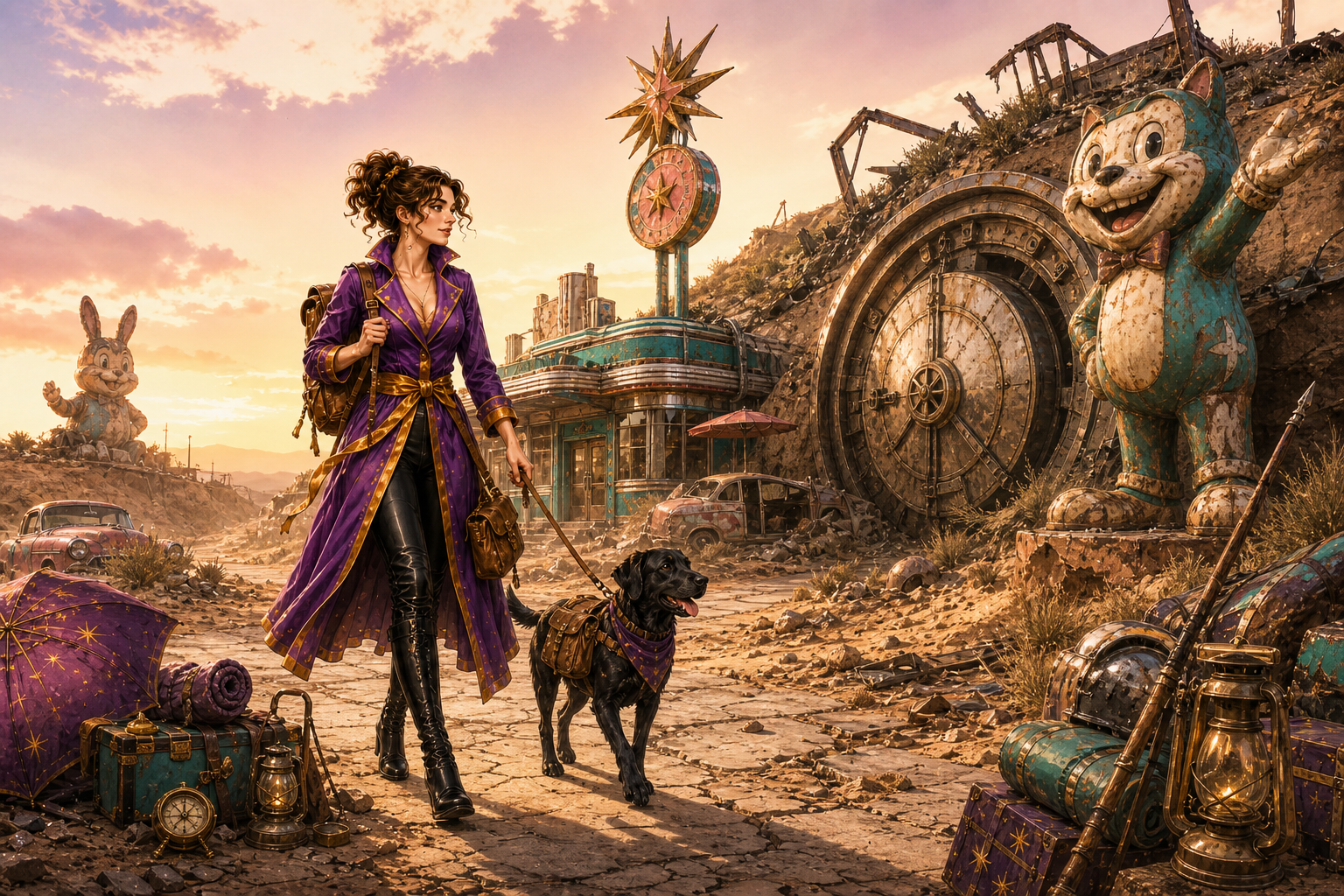
Fallout works because the end of the world arrives with mascots, jingles, vault doors, and a truly alarming amount of customer service energy.
Fallout is popular because its apocalypse comes with a sales smile.
The bombs fall, the world burns, and somewhere a cheerful little mascot is still pointing at a diagram with both thumbs up.
That is the whole trick. Fallout takes the end of everything and wraps it in the language of brochures, jingles, vault tours, corporate safety films, uniforms, slogans, and smiling faces painted on cracked walls. The joke lands because the smile stays in place long after the system behind it has gone spectacularly poorly.
Lots of apocalypse stories ask, “How do people survive after civilisation collapses?”
Fallout asks, “What if civilisation collapsed and the welcome video kept playing?”
That question is horrible. It is also very funny.
The vaults are the best version of this. On paper, a vault is safety. Big door. Clean rooms. Matching outfits. A plan. The whole thing has the brisk, laminated confidence of a school trip led by a man named Graham who owns three whistles.
Then the door shuts.
Then you remember Fallout’s vaults were often experiments, traps, social pressure cookers, or tiny nightmare offices with bunk beds. The terror is simple: the people inside were sold safety by the same machine that treated them as test material.
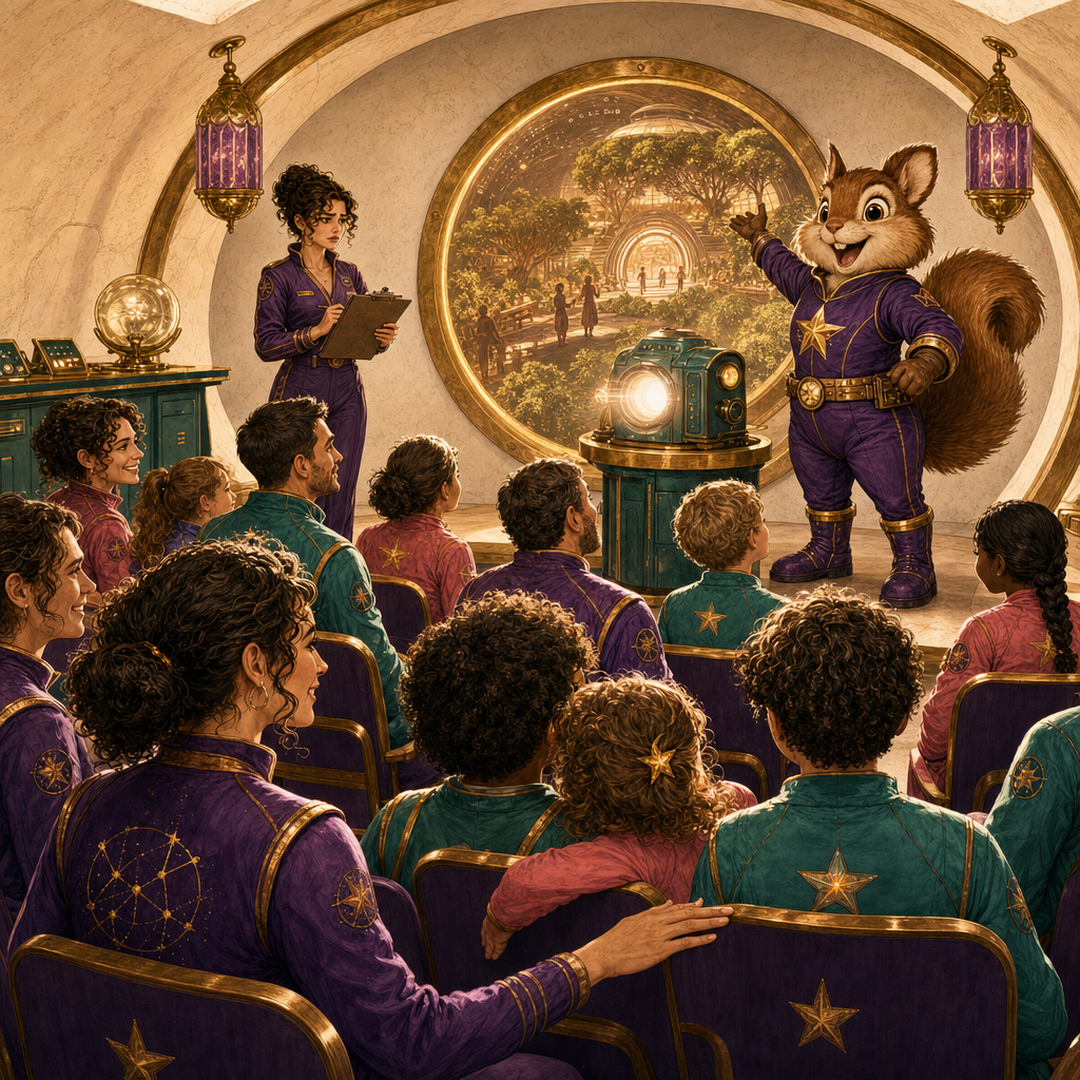
That is why the satire works so well. Fallout does not need to shout, “Corporations can be bad, actually.” It simply shows you a gleaming bunker where the paint is nice, the mascot is smiling, and the plan has turned twelve families into a spreadsheet with bones.
The world keeps using the old language because the old language is recognisable.
We know the tone. We know the too-bright poster. We know the calm message after something has clearly gone wrong. We know the cheerful instruction to remain patient while smoke gathers in the ceiling tiles.
Fallout just pushes that feeling until it is wearing power armour.
The factions do the same job. Everyone has a costume, a symbol, a rulebook, a grand story about why they should be in charge. The Brotherhood of Steel has ceremony and hardware. The NCR has flags and paperwork. Raiders have branding too, although theirs has more skulls and far fewer biscuits at the meeting.
Each group is trying to make the wasteland make sense.
That is deeply human. People do this in every story after the end. Give us ruins and we will invent a uniform by Thursday. Give us a crater and someone will form a committee beside it.
Fallout understands that survival is practical, but belonging is theatrical.
The mascot matters because he makes the horror sharper. A grinning cartoon face beside a nuclear warning is funny for about half a second. Then it becomes unsettling. Then it becomes funny again, because the human brain is a badly managed village hall and sometimes it copes by laughing at the sign-in sheet.
The Last of Us gives us fungus, grief, and the terrible weight of love. Mad Max gives us engines, dust, and people making religion out of steering wheels. Fallout gives us the apocalypse as a product launch that nobody cancelled.
That is its strange comfort.
The disaster is huge, but the storytelling gives it handles. Vaults. Mascots. bottle caps. factions. radio songs. lunchbox colours. You can wander through the wreckage because it has shapes you understand. The world is broken, yes, but it is broken in categories.
Fallout is funny because the branding survived.
Fallout is scary because the branding survived.
And Fallout is popular because we recognise the grin. We have all seen a cheerful system explain away a disaster in its best indoor voice.
Fallout just adds mutants, vault doors, and a jaunty tune while the ceiling quietly comes down.