Why Silo Makes Us Want to Climb the Forbidden Stairs
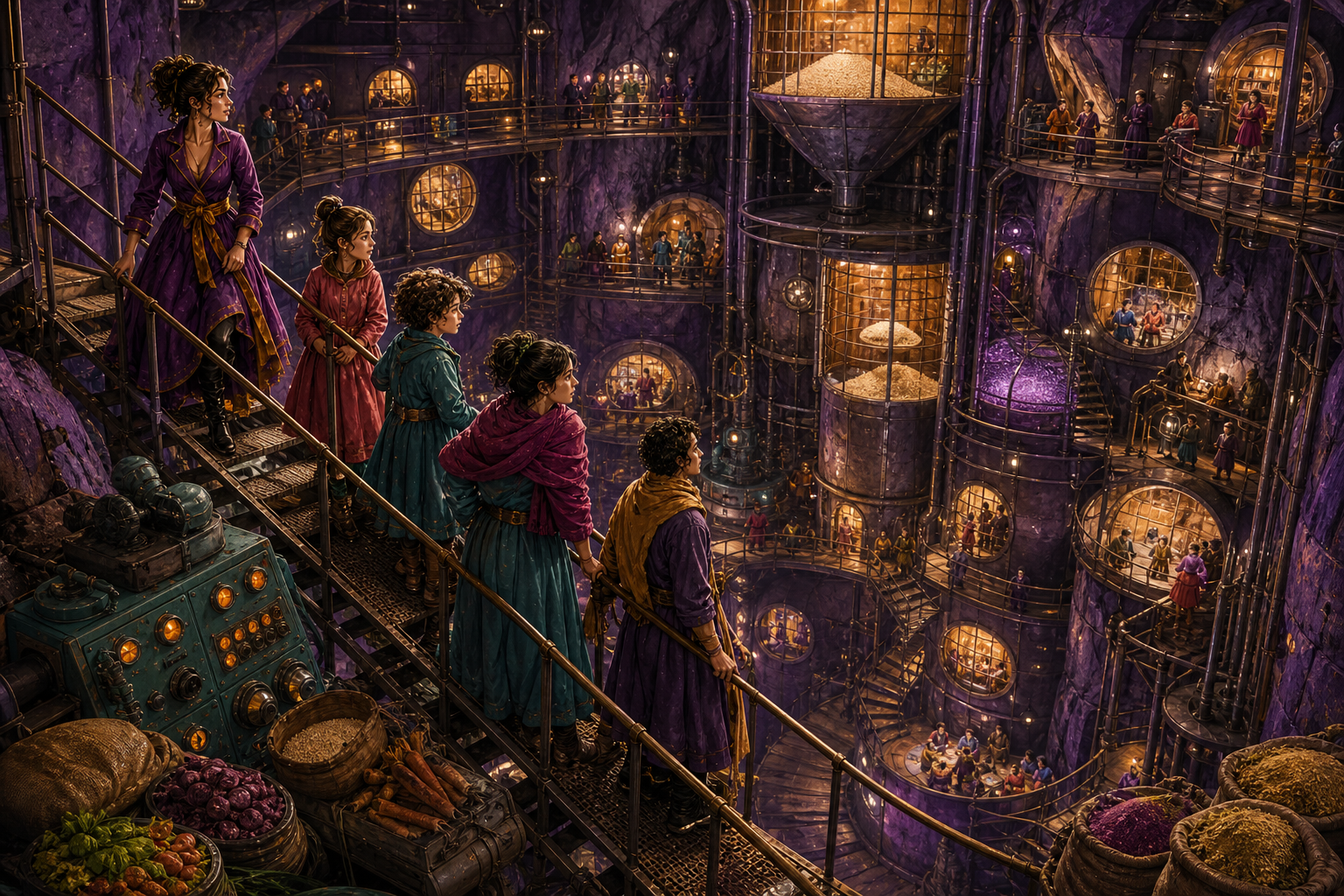
Silo works because every rule sounds sensible until one ordinary question makes the whole place reach for a clipboard.
Why do people love Silo so much?
Because the walls are close, the rules sound sensible, and then one person asks a question so normal it could be printed on a tea towel.
Something like: Why are we doing this?
And suddenly the entire underground society has produced three officials, a locked drawer, and a man named Bernard looking as if he has personally swallowed a filing cabinet.
That is the pleasure of Silo, and of every good claustrophobic mystery-box story. The world begins as a system. It has routines. It has job titles. It has stairs. So many stairs. Everyone knows where they are allowed to go, what they are allowed to say, and which historical truth has been placed in a cupboard marked Absolutely Not.
The hook is simple: people live underground, they cannot go outside, and nobody is supposed to ask too many questions about why.
The clever bit is that almost every rule feels practical at first.
Of course there are rules. People are trapped in a giant concrete tube. You cannot run that on loose feelings and a communal soup ladle. Somebody has to manage food, power, repairs, births, deaths, crimes, screens, secrets, and whatever is happening on level 12 on a damp Tuesday.
The horror creeps in because the rules do not arrive wearing a cape.
They arrive as safety.
They arrive as tradition.
They arrive as “this is how we keep everyone alive,” which is a very hard sentence to argue with when everyone is, in fact, trying to stay alive.
That is why Silo gets under the skin. It does not begin with a monster at the door. It begins with a procedure.
A form.
A ceremony.
A punishment that has been explained so many times it has started to sound normal.

Claustrophobic mystery-box stories work because they shrink the world until every detail gets suspicious.
A hallway is no longer just a hallway. It is a place where someone might be listening.
A stairwell is no longer exercise. It is class structure with handrails.
A screen is no longer a screen. It is the only view anyone has, which makes it either a window, a lie, or the world’s most aggressive office noticeboard.
The smaller the setting, the bigger the question gets.
This is why we keep watching.
We want the map. We want the forbidden room. We want the old object in the drawer, handled with the careful panic of a vicar finding a raccoon in the baptismal font.
But really, we want the moment someone asks the question everyone has been carefully walking around for generations.
The question is rarely fancy. That is the key.
Good mystery-box stories are not built on people saying, “Let us examine the deep machinery of our society.”
They are built on someone saying, “Hang on.”
Juliette Nichols is perfect for this because she is practical. She fixes things. She understands machines. She looks at the world as a set of parts that should connect properly, and when they do not, she keeps looking.
That makes her dangerous in the least dramatic and best possible way.
A person who wants power can be bargained with.
A person who wants answers is a stair-based emergency.
And Silo knows the special tension of a place where everyone has learned to survive by being careful. It is not only about secrets. It is about the cost of touching them. Every answer has rent, plumbing, neighbours, food supply, and several levels of armed inconvenience attached.
That is the grown-up magic of the show.
The mystery is exciting, yes. The outside. The cameras. The history. The hidden rooms. The grand question of what is true.
But the real itch is smaller and more familiar.
We know what it feels like when a rule has been around so long nobody remembers the reason. We know the strange power of “because that’s how it’s done.” We know the tiny social danger of being the person who says, “Sorry, but why?”
Silo turns that feeling into a whole society with laundry schedules and murder.
That is why we like claustrophobic mystery-box stories.
They make curiosity feel physical. They put it in stairwells, locked offices, crowded cafeterias, and quiet rooms where one ordinary question can do more damage than a bomb.
By the time the answer starts coming, we are already trapped in there too.
Politely, of course.
We have read the signs.