Why We Keep Letting Vampires Back to the Window
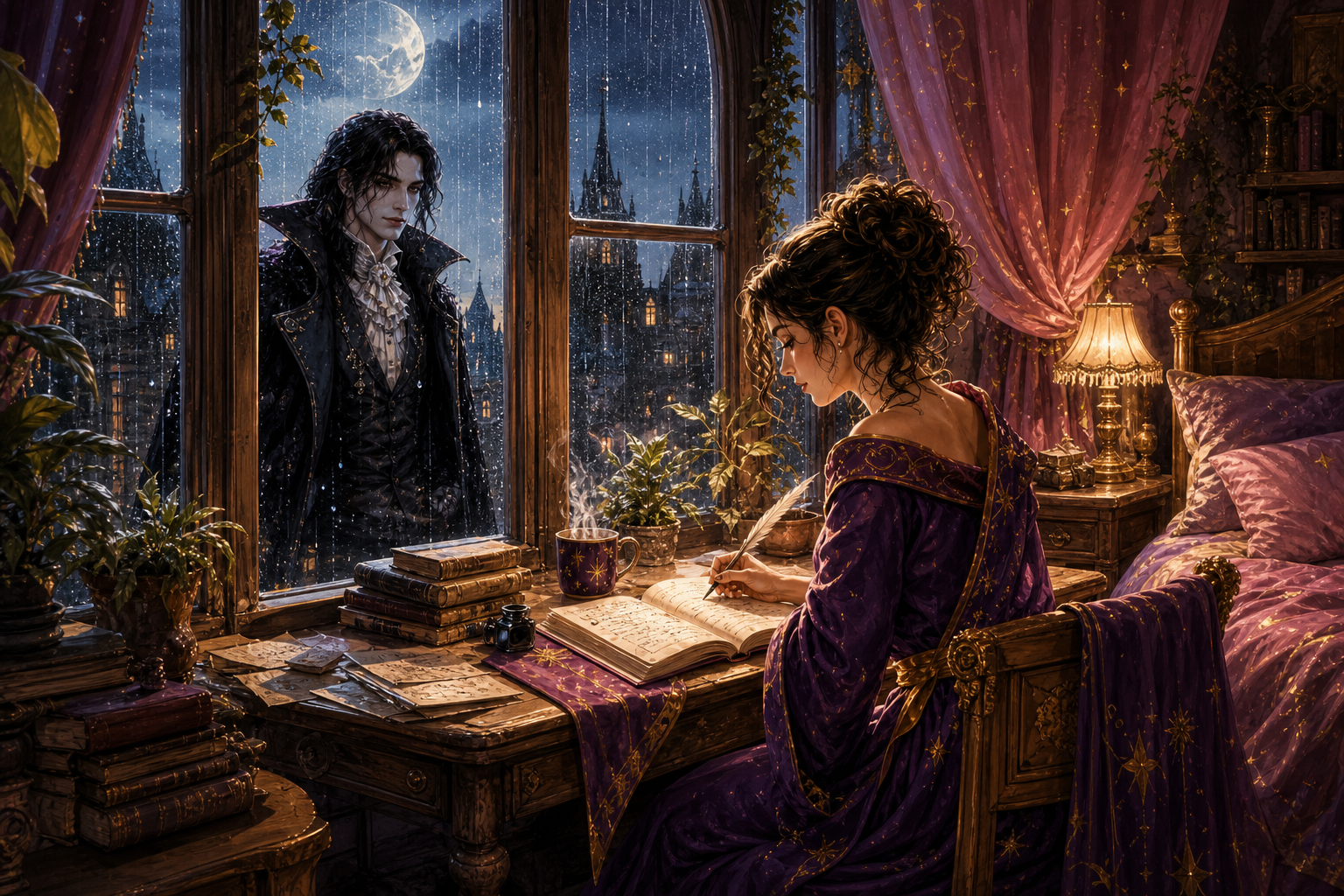
Paranormal romance keeps returning because vampires turn terrible choices into candlelit appointment viewing.
Why do vampire romances keep finding us at 11:47 p.m., fully prepared to ruin tomorrow?
You were going to watch one episode. A responsible episode. A small, tidy portion of immortal yearning, perhaps with a biscuit.
Then someone stood outside a window in the rain, looking tragic and cheekboned, and the evening was placed into ceremonial custody.
Vampires keep coming back because they are terrible choices with excellent lighting and very long consequences.
That is the whole ministry.
Twilight gave us the window visit as a major social event. Bella is trying to be a normal teenager, which is already a demanding government position, and Edward appears with the full energy of a boy who has never had to text first. He is ancient. He is dramatic. He has chosen high school again, for reasons best reviewed by a committee.
And still, the pull works.
Because vampire romance takes the ordinary panic of liking someone and gives it capes, thunder, and a life expectancy problem.
The Vampire Diaries understood this with almost rude efficiency. Mystic Falls is a town where every dance has a theme, every hallway contains three secrets, and every handsome man has been alive long enough to know better. Stefan broods with discipline. Damon flirts as a public safety concern. Everyone makes choices that would require at least six cups of tea and a folding chair in real life.
We watch because the feelings are huge, but the rules are beautifully simple.
Invite him in, or do not.
Kiss him, or do not.
Trust the immortal man with the old grief and the excellent coat, or make a sandwich and move on with your studies.
History suggests the sandwich will wait.
True Blood took the same hunger and made it louder, hotter, and much less interested in good manners. Bon Temps feels sticky with secrets, gossip, and people standing too close under poor local governance. The vampires are political, erotic, ridiculous, dangerous, and often dressed for a nightclub inside a thunderstorm.
It is comfort television in the strangest possible way. Everyone is at risk. Nobody is calm. The bar lighting is doing heroic work. And still, there is pleasure in knowing the shape of it: desire arrives, consequences follow, somebody says a name with far too much mouth.
Buffy the Vampire Slayer added the best possible complication: what if the girl at the centre of the vampire story could absolutely handle herself, and the undead were still going to make her life emotionally inconvenient?
Buffy made the metaphor wear boots and carry a stake. First love feels apocalyptic when you are young. On Buffy, it sometimes is. Angel is romance as penance. Spike is romance as bad timing with bleach. The vampires are not only monsters. They are old wounds with eyeliner, and Buffy has school in the morning.
That is why the genre lasts. Vampires turn feelings into a visible appointment. Love does not sit quietly in the corner. It climbs the trellis. It waits by the crypt. It appears in a velvet room and speaks as though every sentence has been aged in a cellar.
Interview with the Vampire makes the longing grander and sadder. Louis and Lestat do not give us comfort because they are sensible. They give us comfort because they are excessive in a way ordinary life forbids. Their love is hunger, theatre, punishment, devotion, vanity, loneliness, and one of the worst shared housing arrangements in fiction.
A vampire story lets desire be dangerous without making the viewer foolish for wanting to look.
That matters.
Real life asks us to be measured. Reply at a normal time. Do not stare. Do not make the room weird. Drink water. Sleep eight hours. Maintain perspective.
Vampires arrive with no interest in perspective. They are all consequence. They make every feeling old, gorgeous, and badly planned.
So we return.
To the window.
To the bite.
To the person who should leave town and instead changes shirts in low light.
Paranormal romance gives us a safe place to want the dramatic thing. The doomed thing. The glittering, blood-stained, moonlit thing that would be disastrous in daylight and perfect for one more episode.
The vampire waits outside.
We know the rules.
We still check the latch.