How to Make a Big Story Feel Personal
A gentle guide for writers whose wars, quests, disasters, kingdoms, feuds, or large casts are starting to drown the person inside them.
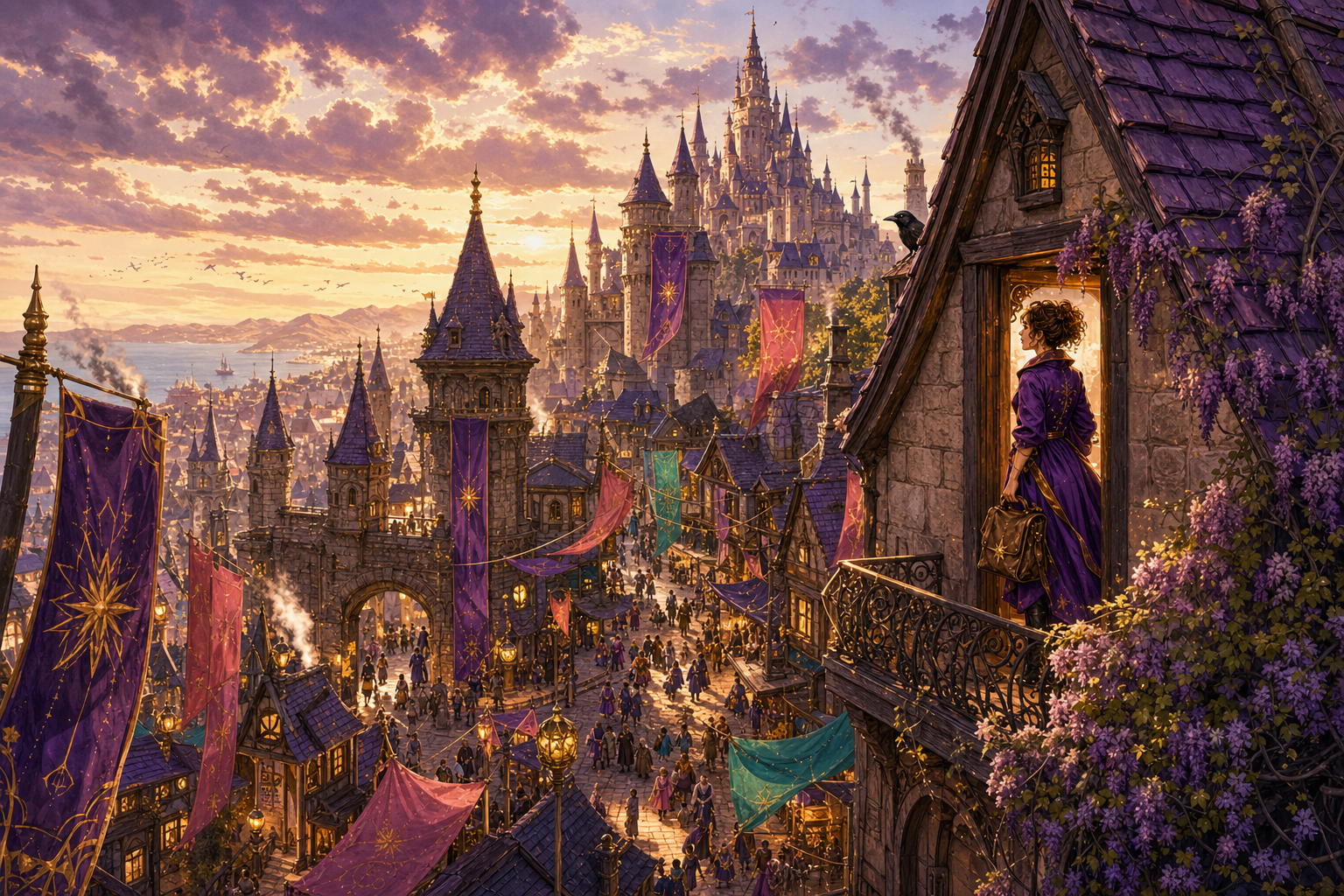
If your story has a war, a quest, a disaster, a royal family, twelve cousins with grudges, and a prophecy standing in the corner with a serious expression, it can start to feel enormous in a way that scares the actual person out of the room.
The fix is smaller than it feels.
You do not need to explain the whole kingdom harder. You need to show what the huge thing costs one person today. One loss. One secret. One choice. One truth they have been avoiding since chapter three, quietly making tea beside it.
That private cost gives the reader a handhold. The world can be massive. The feeling has to fit in one human chest.
1. Choose the person this moment belongs to
Big events become personal when the reader knows whose life is being bent by them. Before you write the whole battle, council, curse, storm, feud, or escape, choose one person for the page.
Ask: who has the most to lose in this exact moment? Who has to act before they are ready? Who cannot leave the room unchanged?
This does not mean other characters stop mattering. It means the reader gets one clear doorway in. A crowd can panic, but one person drops the medicine bottle. An army can march, but one soldier recognises the road home.
Before:
The rebellion began at dawn. The northern gate fell first, then the market district.
After:
The rebellion began at dawn. Mara heard the northern gate fall while she was cutting her little brother’s hair with sewing scissors, because the soldiers were looking for boys old enough to carry a spear.
The second version still has the rebellion. It also has a child, a pair of scissors, and a sister trying to solve a war at kitchen-table size. That is where the reader can feel it.
2. Give the huge event one private cost
A big story usually has public costs: cities fall, alliances break, ships sink, families split, crowns change hands. Those matter. But the reader often feels them most clearly through a private cost.
Try finishing this sentence:
Because of this huge event, this character must lose, hide, admit, or choose ______ today.
Keep it immediate. “She may lose her future” is large and misty. “She has to give her wedding money to the ferryman before sunset” is sharp enough to hold.
Example:
Because of the plague, Tomas must hide the fact that his mother is coughing.
That gives you a scene:
Tomas stands in the chapel queue with his mother beside him. The healer asks everyone to breathe into a silver cup. Tomas hears the cough building in her chest and starts singing the harvest hymn too loudly, badly, desperately, because the guards know that song and might let the old woman pass.
Now the plague has rules, fear, love, and a terrible little song. The reader understands the danger because Tomas is trying to survive it in a specific, human way.
3. Let the big thing enter through ordinary details
When scale gets too wide, bring the scene back to normal objects and routines people already understand: breakfast, washing, a borrowed coat, a child’s lesson, a locked door, a missed birthday, a meal gone cold.
Ordinary details do not make the story smaller. They make the huge thing touchable.
A kingdom at war can show up in a mother watering down milk. A family feud can show up in someone crossing out a name on a wedding seating plan. A quest can show up in a blister under a bandage no one has time to change.
Before:
The flood destroyed the lower city, and thousands were displaced by morning.
After:
By morning, the lower city was underwater. Priya found her father’s blue mug floating against the stair rail, still chipped at the rim from the day he laughed too hard and dropped it.
The second version does not need to announce grief. The mug does the work because it is specific to Priya. It tells the reader what the flood took from one home before anyone starts counting streets.
If you are stuck, look for the smallest thing that would be different tomorrow. What can no longer be worn, cooked, said, opened, visited, or kept on the shelf? Put that in the character’s hands.
4. Make the choice hurt in two directions
A personal story gets stronger when the character cannot choose cleanly. The large event should press on something they care about from both sides.
Try giving them two good reasons, not one good reason and one silly one wearing a hat. If they stay, someone suffers. If they leave, someone else does. If they tell the truth, they lose safety. If they lie, they lose themselves a little.
Example:
Nina can end a family feud by admitting her uncle forged the old land deed. But if she speaks, her grandmother loses the house she has defended for forty years. If Nina stays quiet, the neighbouring family loses the orchard they planted before she was born.
A scene might look like this:
Nina finds the deed folded inside the hymn book. Downstairs, her grandmother is teaching the younger cousins how to make jam for the peace supper. Across the lane, Mr. Patel is nailing a new sign to the orchard gate with hands that shake from age, fury, or both. Nina puts the deed in her pocket and feels the paper warm there while everyone sings.
The feud is large. The choice is personal. Nobody gets to float above the problem making noble speeches from a balcony unless they have first stood in the kitchen with the evidence sweating in their palm.
5. Keep returning to the same private thread
Once you find the private cost, do not abandon it after one good scene. Let it return in small ways. That thread tells the reader, yes, the world is changing, and yes, this person is changing with it.
If Mara cut her brother’s hair to hide him, bring the hair back. Maybe later she sees soldiers dragging boys from a schoolyard and notices one with the same uneven fringe. Maybe her brother asks when it will grow back. Maybe at the end, she keeps the scissors even after the war, because she knows what she once had to do with them.
That thread gives the story emotional memory.
You can use this simple check while drafting or revising:
1. What is the large event?
2. Whose moment is this?
3. What does it cost them today?
4. What ordinary detail shows that cost?
5. What choice does it force?
6. Where can that private thread return later?
A big story does not have to stop being big. Let the mountains, fleets, crowns, curses, inheritances, and ancient grudges have their splendid dramatic furniture. Then give the reader one person with one painful thing to do before nightfall.
That is usually where the whole world starts to matter.
Pick one character and ask: what does this huge event cost them before bedtime?