Duct Tape Math Panic: Why Sci-Fi Makes Impossible Problems Feel Weirdly Comforting
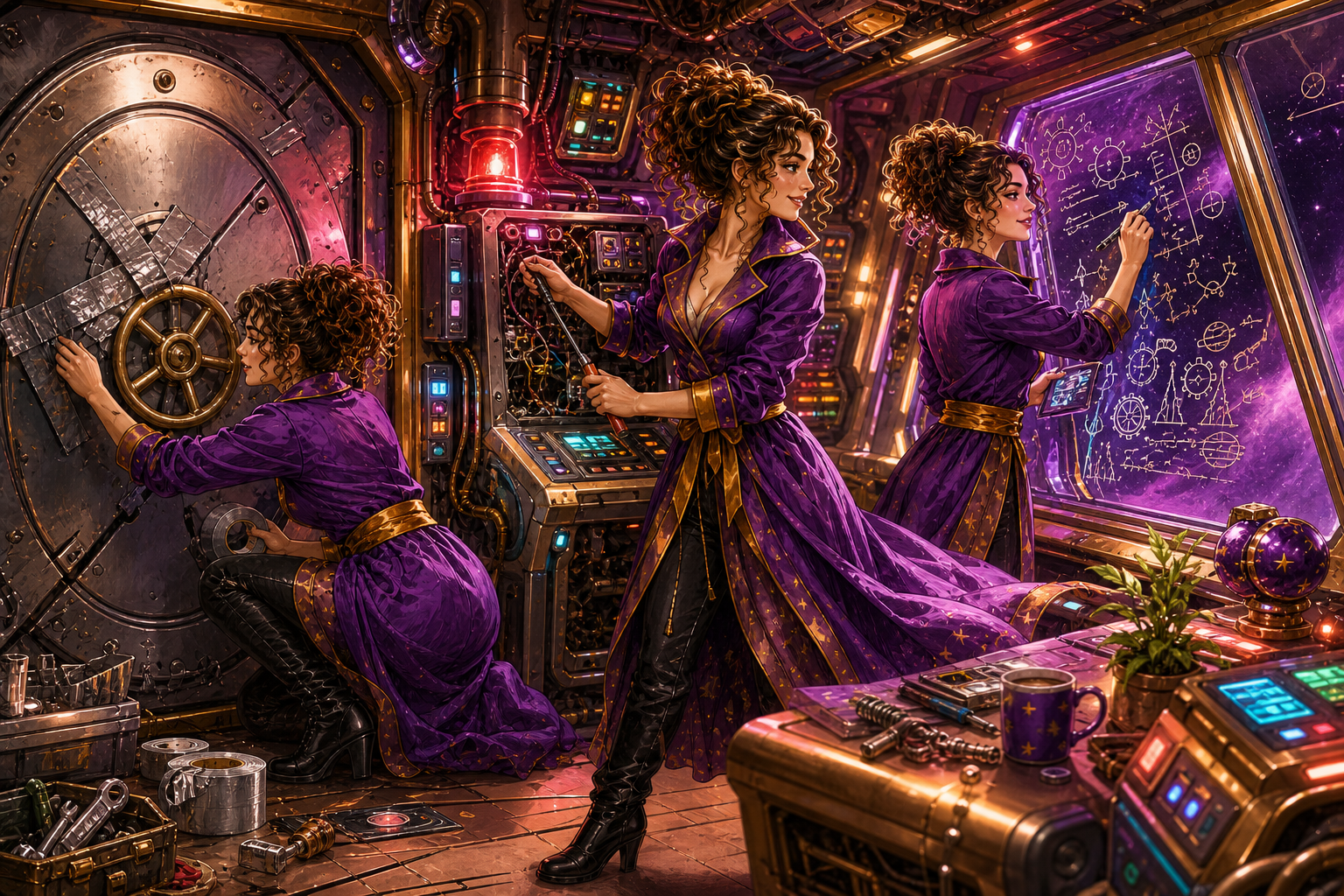
A warm little salute to sealed doors, blinking warning lights, and the brave soul still doing math while everyone’s eyebrows try to leave the ship.
There is a special kind of sci-fi scene that activates something ancient and deeply dramatic in the reader brain.
The door is sealed.
The oxygen is taking a leisurely stroll toward zero.
A warning light is blinking with the confidence of a tiny red tyrant.
Someone says, “We have twelve minutes.”
And then, blessedly, a person with tired eyes and a terrible lunch schedule starts doing math.
This is the sacred art of Duct Tape Math Panic: the moment in science fiction when everything is absolutely going wrong, but someone is still thinking in complete sentences.
Not calmly. Nobody needs calm. Calm left forty-seven alarms ago.
What we love is the sight of a brain staying lit while the walls make suspicious noises.
Sci-fi understands a very human truth: most of us do not face our hard days with a clean desk, perfect hair, and a wise little plan written in blue ink. We face them mid-sentence, over-caffeinated, with one shoe spiritually untied, trying to remember if we replied to that message while the universe taps its watch.
So when a spaceship crew is trapped behind a sealed door with only a bent tool, half a battery, and a person muttering numbers under their breath, it feels oddly familiar.
Sure, we may not be rerouting power from the hydroponics bay.
But we have all stood in the kitchen, looked at a situation, and thought, “Okay. Nobody panic. What do we have?”
A lemon.
A charger at 3%.
A deadline.
A very bold amount of laundry.
A life problem that arrived without instructions and brought its own soundtrack.
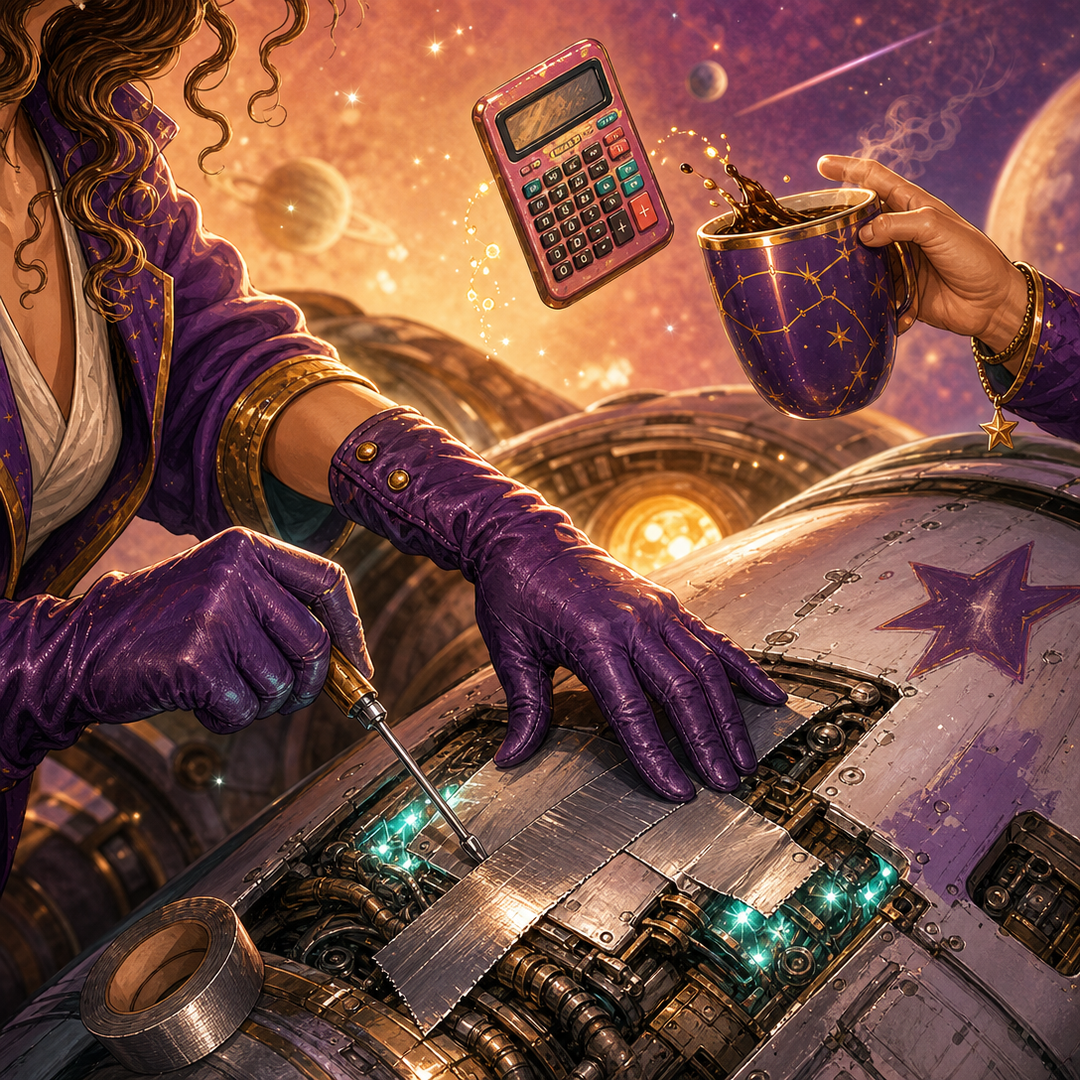
The joy of these scenes is not really the science. Most of us are not checking the equations. We are emotionally attached to the fact that somebody is checking anything.
The sealed door matters because it gives the story a shape: here is the problem. The blinking warning light matters because it gives the problem a little drumbeat. The tiny crew matters because they cannot solve it by being huge and shiny and chosen by prophecy. They have to solve it by trying things.
They argue. They guess. They make the wrong call, then the better call. They patch the patch. They use the wrong object for the right reason. They say, “That will hold for now,” which is possibly the most comforting sentence in all of fiction and also most households.
Because sometimes “for now” is the bridge.
For now, tape the wire.
For now, hold the door.
For now, breathe slowly.
For now, keep thinking.
That is the little lantern sci-fi carries into the dark for us. It does not promise that smart people never get scared. It does not pretend bravery feels tidy. It says fear can be in the room, pulling up a chair, adjusting its tiny napkin, chewing politely on the wallpaper — and still, someone can look at the panel and ask, “What happens if we switch these two?”
That is why the impossible problem feels comforting.
Because the answer is not always a miracle.
Sometimes it is a tired person doing arithmetic with shaking hands.
Sometimes it is three people choosing the next useful second.
Sometimes it is duct tape, a guess, and the wild faith that thinking still counts even when the lights are flashing.
Especially then.
Save this for the next time your life starts blinking red and asking for math.