Geralt Grunt Appreciation Society
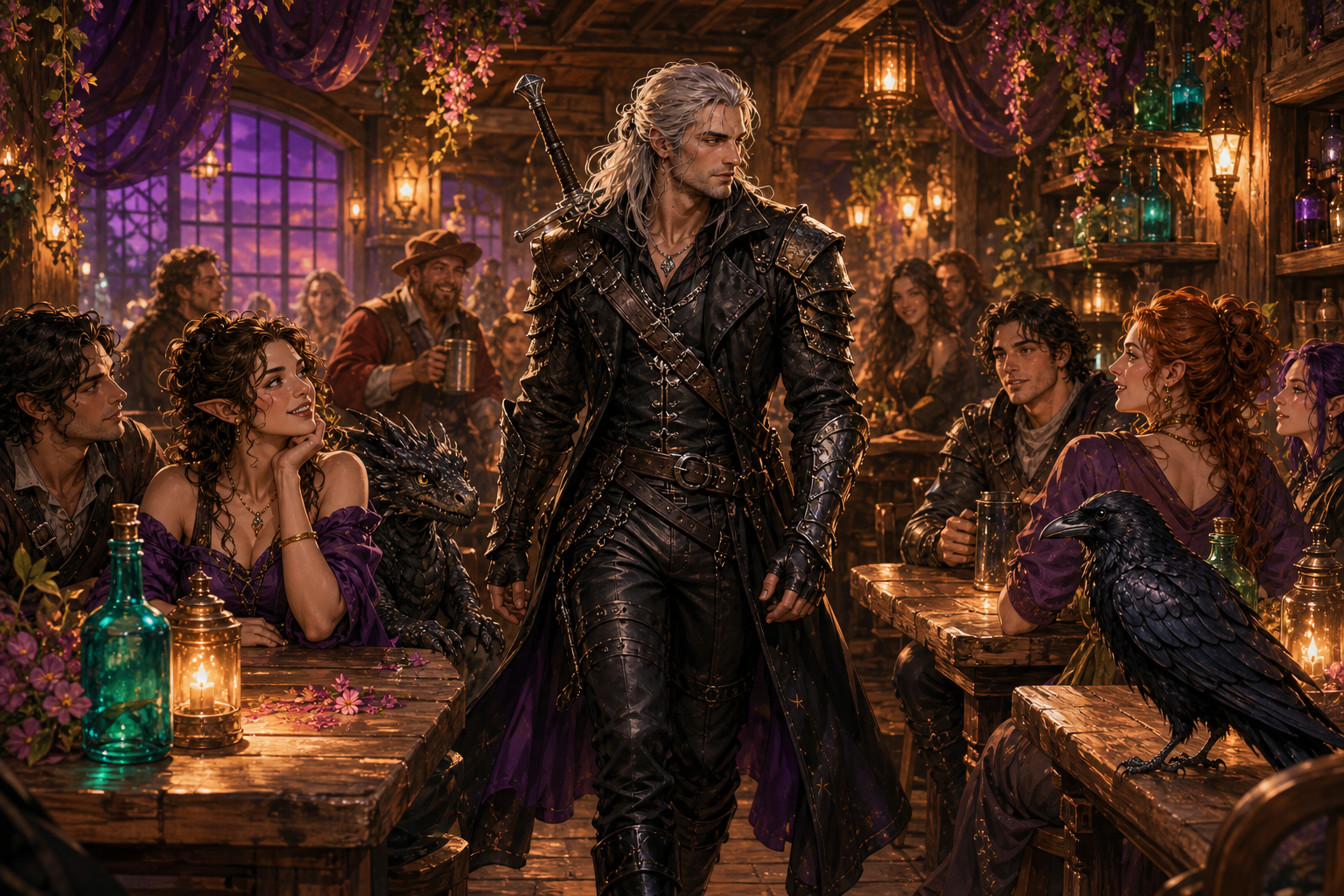
A small, sincere salute to The Witcher’s finest language: devotion, danger, and one extremely useful grunt.
Geralt Grunt Appreciation Society
There are many ways to say I care about you.
Some people write letters. Some bring snacks. Some say actual words, which is bold and suspiciously direct.
Geralt of Rivia chooses a different path.
He grunts.
And somehow, through the power of a low sound made by a man who looks like he was carved out of storm weather and poor sleep, we understand everything. Annoyance. Concern. Agreement. Disagreement. A full emotional weather report with no wasted syllables.
This is why the grumpy protector keeps winning.
The Witcher did not invent the trope, obviously. Stories have loved a brooding sword person for centuries. Give us someone tall, tired, morally complicated, and slightly damp from standing in a dramatic landscape, and we will gather around like villagers at a festival.
But Geralt made the grumpy protector feel freshly irresistible because he is not just silent for aesthetic purposes. He is silent because words are not his native love language.
His native love language is showing up.
He shows up with a sword. He shows up with a warning. He shows up with the facial expression of a man asked to attend a birthday brunch at dawn. He shows up even when he insists, quite firmly, that he would rather not be involved.
And then he gets involved.
That is the whole delicious trick.
Geralt says no like a man trying to place a boundary. The story hears yes, but emotionally repressed.

The appeal is not that he is cold. Cold is boring. A locked cupboard can be cold. A rock can be cold. A salad forgotten in the back of the fridge can be cold.
Geralt is guarded.
That is different.
Guarded means the feelings are in there, stomping around in armor, refusing to fill out a form. Guarded means he has learned the world is sharp, so he keeps himself sharper. Guarded means every tiny act of care lands like a thunderclap.
A soft look from Geralt is not a soft look from just anyone.
It is an event.
A small nod? That is basically a sonnet.
A grunt delivered while choosing not to leave someone behind? Put it in a museum. Light it beautifully. Let scholars weep near it.
The best grumpy protectors are never simply rude men with weapons. That would be exhausting, like sharing a long road trip with a door that sighs.
They work because the grumpiness is the wrapping, not the gift.
The gift is devotion.
Geralt’s devotion has a low word count, but it is sturdy. He may not explain his feelings with a candlelit speech and twelve metaphors about the moon, but he will stand between someone and a monster without making a huge production of it. He will complain, absolutely. The complaining is part of the seasoning.
But he will stand there.
That is what fans love.
Not the emotional distance by itself. Not the growl by itself. Not the sword by itself, although let us be honest, the sword is doing fine work.
We love the gap between what he says and what he does.
He says he does not want trouble. He walks directly toward it.
He says people are complicated. He keeps saving them anyway.
He says less than almost everyone around him. Somehow, he makes the room louder.
That is the magic of Geralt: he is ridiculous and moving at the same time. A white-haired monster hunter with cat eyes, bathtub intensity, and the emotional availability of a locked cupboard should not be comforting.
And yet.
He is.
Because beneath all the grunts and grimaces is one of fiction’s most beloved promises:
I may not know how to say this gently, but I will not let you face the dark alone.
That is the grumpy protector spell.
That is why we keep joining the appreciation society.
No dues. No meetings. Just a fond little nod, a meaningful grunt, and the understanding that sometimes the most romantic sentence in fantasy is a man looking exhausted and staying anyway.