The Sensible Woman Ignored
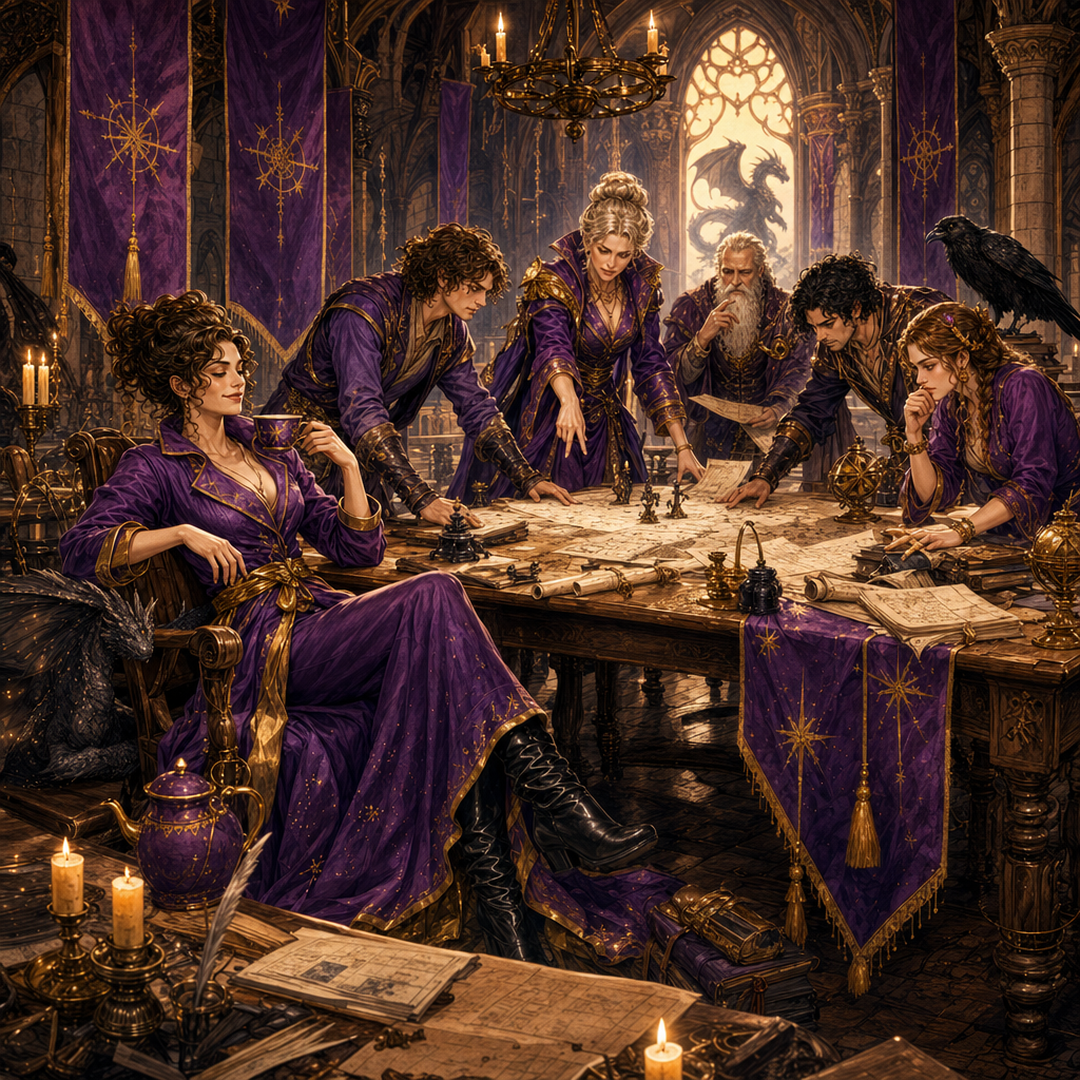
A small salute to the fantasy woman who suggests the obvious safe plan while everyone else chooses banners, prophecy, and a large reptile-shaped disaster.
Every fantasy council has one sensible woman being ignored while twelve people in expensive fabric prepare to make the land worse.
You know her.
She is sitting at the end of the table with perfect posture, one eyebrow doing the work of a full legal department. She has already suggested the only reasonable option.
Do not invade before breakfast.
Do not trust the prophecy delivered by a wet man in a cave.
Do not put the angry teenager near the dragon.
Everyone heard her. Everyone nodded with the grave faces of people who are absolutely about to do the opposite.
This is one of fantasy’s finest weekly ceremonies: The Sensible Woman Ignored.
House of the Dragon runs on it. Someone will say, quite clearly, that perhaps the family with nuclear lizards should take a breath before turning the realm into toasted upholstery. Then a man with a lineage problem will stand up, say something about honour, and the nearest map will become everyone’s emotional support surface.
Dune: Prophecy knows the shape too. A woman in a severe outfit will look at an empire built on fear, bloodlines, and long-term manipulation, then suggest that perhaps this particular plan has too many sharp edges. The room will pause. A bell will ring somewhere. Ten people will decide the sharp edges are actually tradition.
The Witcher has been doing it for years. Someone will warn that the monster is political, the king is worse, and the forest is keeping receipts. Then a fellow with a sword will sigh in a gravelly way, which is legally distinct from a plan, and everyone will head directly toward the screaming.
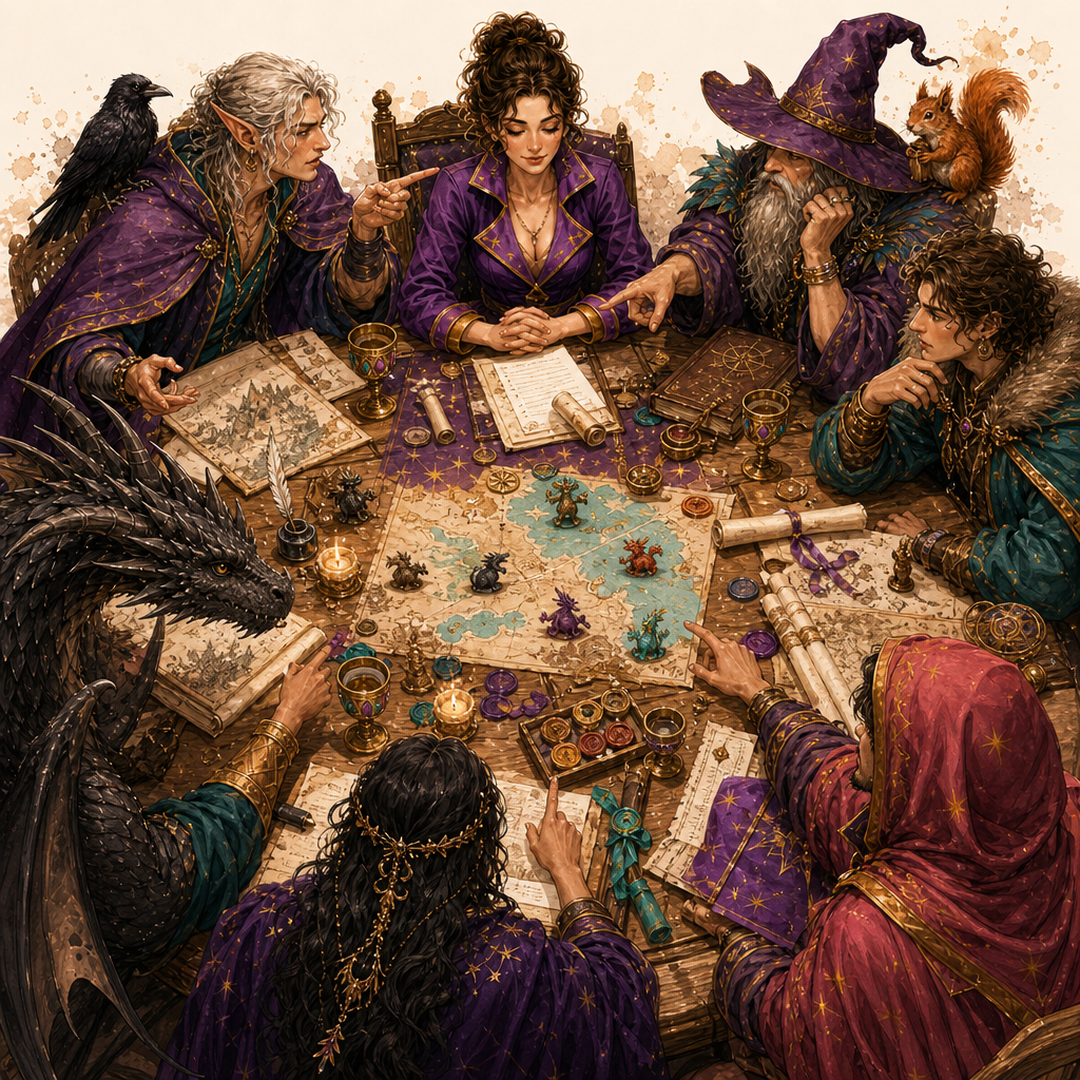
The joy of this trope is that the ignored person is almost always correct in the least dramatic possible way.
She is not asking anyone to solve the ancient curse by Tuesday. She is not demanding a perfect kingdom. She is asking the group to consider one modest idea, such as:
maybe the haunted-looking corridor can wait until daylight.
And because this is fantasy, daylight is treated as cowardice.
There is always a grander option available. Banners can be raised. Blood can be sworn. A throne can be claimed by someone with a family tree shaped suspiciously like a fork dropped down a staircase. A prophecy can be interpreted by the one person in the room who wants it to mean “give me a crown.”
The sensible option never has enough theatre. That is its fatal weakness.
“Let’s send a letter” cannot compete with “summon the banners.”
“Let’s verify the vision” struggles against “the flames showed me a horse, three moons, and my own importance.”
“Let’s keep the dragon indoors” rarely survives contact with a prince wearing leather and carrying unresolved childhood material.
This is why we love her.
She is the audience’s representative at the table. She is us, on the sofa, holding a biscuit halfway to our mouth, whispering, “No, don’t go in there,” while every character selects the most expensive route to regret.
She makes the whole spectacle better because she proves the disaster was avoidable. There was a door marked Normal Decision. It was visible. It had handles. It may even have been unlocked.
Nobody used it.
That small fact gives fantasy its special flavour. The dragon matters, yes. The prophecy matters. The sword with a family name and a terrible maintenance schedule matters.
But nothing beats the moment a calm woman says, “Perhaps we should wait,” and the room treats waiting as an exotic foreign weapon.
Five minutes later, somebody is on fire, a treaty is ruined, and the sensible woman is staring into the middle distance with the peaceful expression of a person updating a private list.
She will be ignored again next week.
We will be there.