Why Does Writing Feels So Hard?

Writing feels hard because you are making people, meaning, events, language, and feelings all at once, which is quite a lot for one Tuesday.
Writing feels hard because your brain is trying to run an entire streaming service with one tired intern and a mug of tea.
You sit down to write one scene. One.
A person enters a room. Fine.
Then you have to decide why the room matters. What the person wants. Why they are pretending they do not want it. What happened before they walked in. What might happen if they leave too soon. Whether the weather outside is helping the mood or standing there with a small umbrella and poor timing.
You came here to write she opened the door and somehow you are in charge of three generations, two betrayals, a staircase, and the exact emotional weight of a coat hook.
That is why writing feels so hard.
Finished stories look smooth. That is part of their spell. You watch The Last of Us, or Bridgerton, or a little village murder show where every suspect owns a suspicious cardigan, and the story seems to move as naturally as breathing.
Someone looks across a room, and we understand longing, danger, family, grief, class, hunger, and whether we trust the man near the punch bowl.
On the page, you are building that feeling before anyone else can feel it.
You are inventing people.
You are choosing events.
You are making meaning.
You are picking language.
You are setting the emotional weather.
And you are doing all of it at the same time, often after lunch, with one tab open for synonyms and another part of your soul wondering if ravens are too much.
They may be. They may also be exactly right. Literature has always had room for a bird with timing.
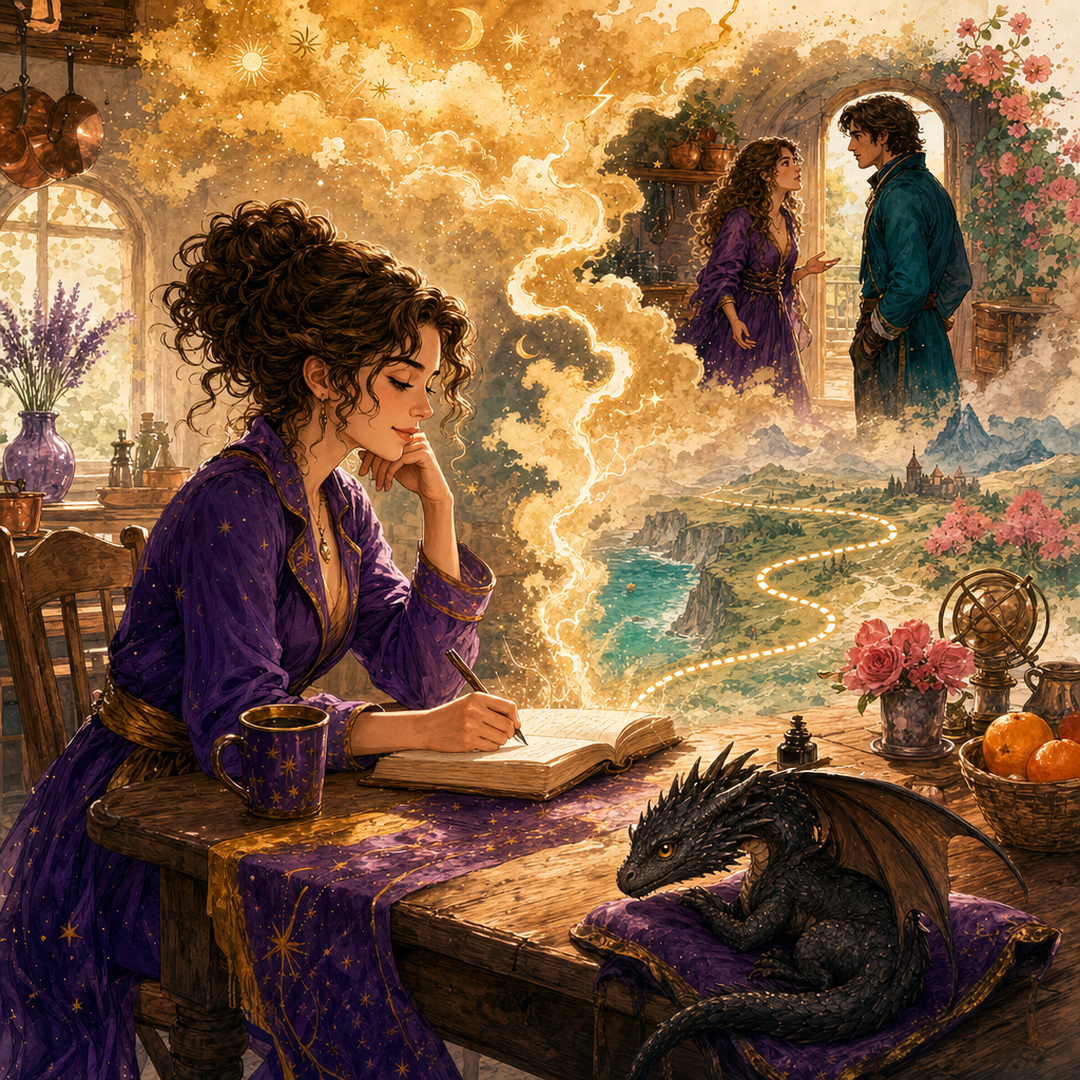
Beginners often think the hard feeling means they are bad at writing.
Tired drafters often think it means the book is broken.
Most of the time, the hard feeling means you have reached the part where the work is visible to you.
Some days you can hear a character clearly, but the scene has no movement.
Some days the plot makes sense until one person asks one normal question, and the whole chapter has to sit quietly for a moment.
Some days every sentence reads as if affection was explained by an appliance manual.
All of that is ordinary draft weather. Annoying, yes. Occasionally rude to the afternoon. But ordinary.
Writing asks your mind to hold a lot of threads at once. A reader gets to arrive when the room is lit, the music has started, and the dangerous man by the punch bowl is already looking mildly troubled. The writer was there earlier, deciding where the punch bowl went and why anyone cared.
So be kinder to the draft than your first alarmed thought suggests.
Ask one small question at a time.
Who wants what in this moment?
What changes by the end of the scene?
What feeling should linger after this page?
What is the plainest next sentence?
That is enough for today.
The whole castle does not need to appear before lunch. Build one wall. Then another. Leave the moat for later.
Writing feels hard because it is hard in the same way loving a story is deep: many things are happening at once, and all of them matter a little.
Your job today is smaller than making a masterpiece.
Make one honest paragraph.
One clear exchange.
One person walk into a room wanting something.
That counts.
That is writing.
The imaginary orchestra can lower its brass instruments for now.