Why Locked-Room Mysteries Feel So Satisfying

A locked door, a short suspect list, and the tiny rude joy of knowing everyone is trapped with the problem.
A locked-room mystery gives you one door, five suspects, and the deeply unfair pleasure of knowing everyone has to stay put until the truth gets uncomfortable.
This is why we keep coming back.
A locked-room mystery starts with a promise so rude it becomes elegant: someone has done the impossible, and everyone nearby is now socially trapped with the consequences.
No one gets to wander off into a second subplot in the woods. No one gets to vanish into a city with twelve neighborhoods and a suspicious aunt. The story draws a neat little circle around the problem and says, please remain inside the circle. There will be questions.
That clean boundary feels good.
Mystery readers love a big world, yes. We enjoy a foggy village, a glittering island, a rich person’s house with too many stairs. But the locked-room mystery gives us something special: limits.
The door is locked. The window is sealed. The train is moving. The boat is at sea. The dinner party has become a paperwork issue for everyone’s conscience.
In Knives Out and Glass Onion, the setting does half the work before anyone even starts lying. A big house. A private island. A group of people with money, secrets, and the exact facial expression of someone who rehearsed their innocence in the mirror.
That is the first satisfaction.
The world gets smaller, so every detail gets louder.
A glass on the table matters. A missing key matters. Who stood where matters. Who heard what through which wall matters. Suddenly the reader is allowed to become completely unreasonable about a footprint.
This is a generous arrangement. The story hands us a puzzle box and says everything important is probably already here. We may still be wrong, but we are wrong with materials.
There is dignity in that.
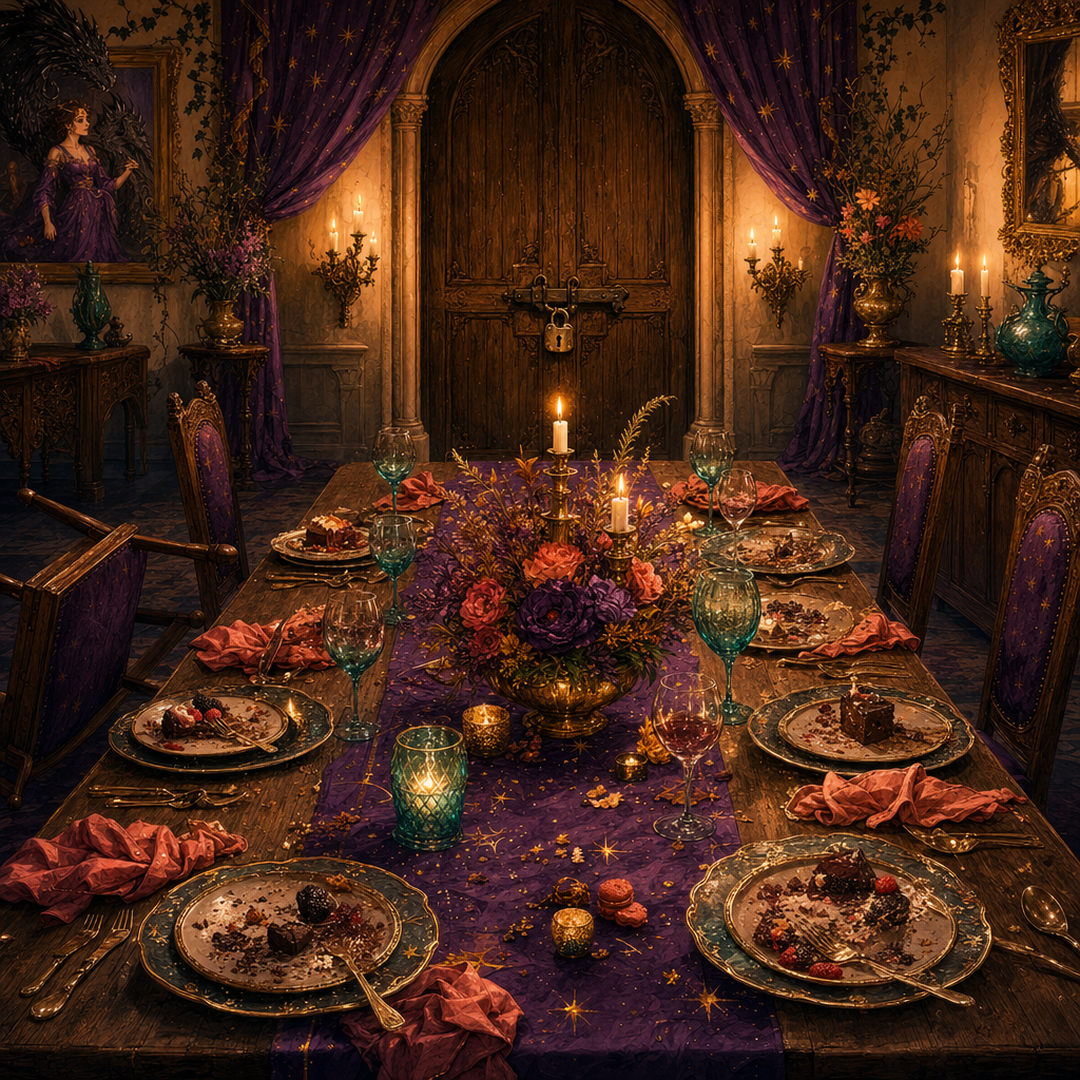
The second pleasure is the suspect list.
A locked-room mystery does not give us an endless parade of strangers. It gives us a small group of people who all have to keep looking at each other.
That is where the good stuff lives.
The real heat in these stories often comes from forced politeness. People are furious, grieving, terrified, guilty, or quietly updating their alibi, and they still have to pass the butter.
This is why Only Murders in the Building works so well when it traps suspicion inside a building, a cast, a shared history. The elevator becomes a moral chamber. The hallway knows too much, by which I mean everyone in the hallway knows too much and has chosen an outfit anyway.
Locked-room mysteries understand that social pressure is suspense with better manners.
Everyone is watching everyone else decide how normal to act. Too calm is bad. Too upset is bad. Leaving the room is bad. Staying in the room is also bad, but at least there are witnesses.
Then comes the impossible setup.
The body is found in a room no one could enter. The weapon appears where it cannot be. The timeline folds itself into a napkin and refuses to open neatly.
This is the rude pleasure.
A locked-room mystery invites us to say, absolutely not, and then read faster.
We want the solution because the setup offends our sense of order. We know there must be a human answer hiding under the theatrical nonsense. A trick. A timing issue. A lie told at exactly the right volume. A person who understood the house better than everyone else.
The best locked-room mysteries do not cheat us. They let the impossible become possible in a way that makes us briefly stare at the wall afterward.
Of course.
Awful. Perfect.
That is the meal.
A closed space. A limited group. A social pressure cooker with nice wallpaper. A problem that looks supernatural until human behavior, always the least relaxing explanation, steps forward with a receipt.
Locked-room mysteries feel satisfying because they make the messy world readable for a little while.
The door is locked.
The suspects are here.
The truth is somewhere in the room, sitting politely, waiting to ruin dinner.