Why One Chair Keeps Ruining Westeros
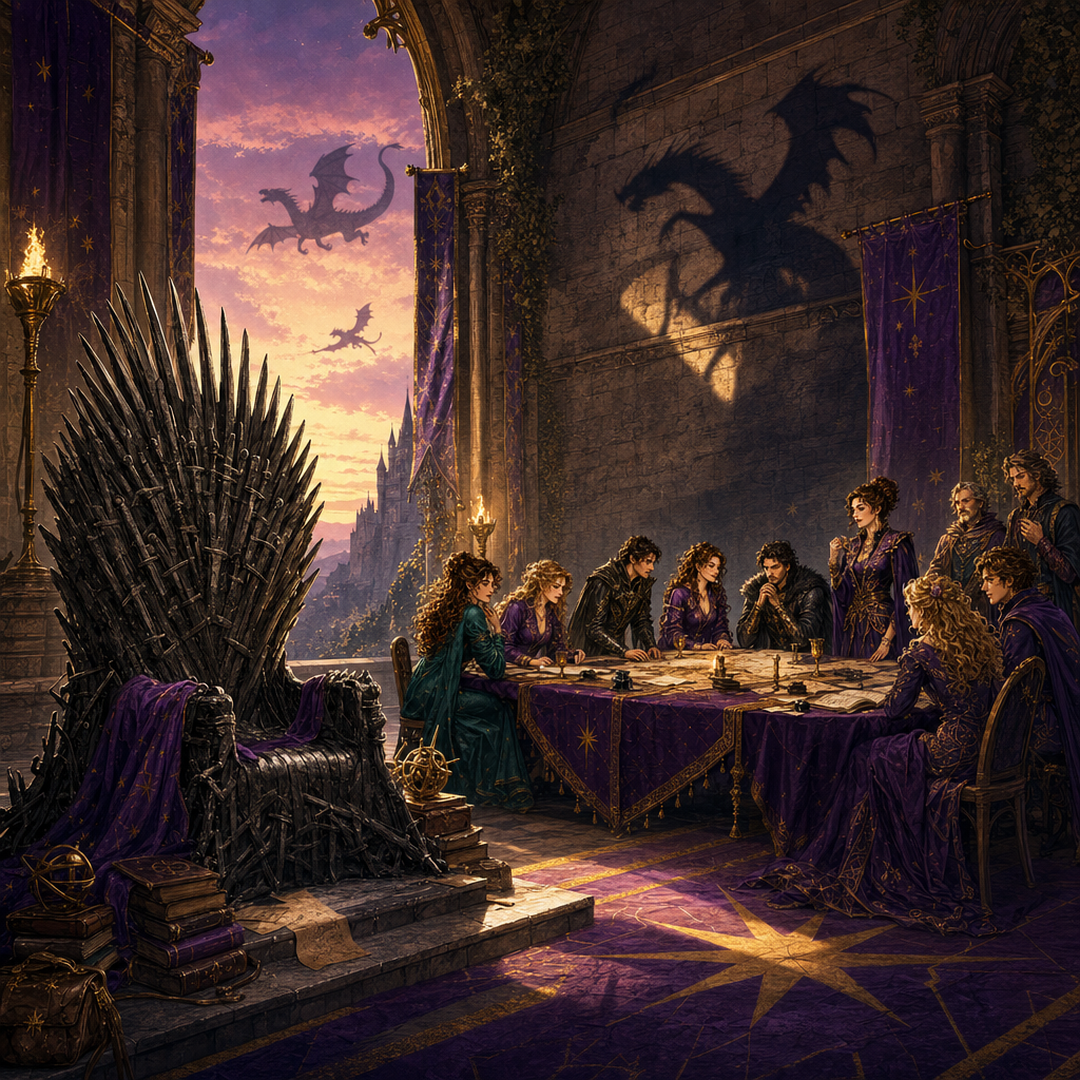
A warm little salute to succession drama, where family pride, old promises, and bad timing turn inheritance into a continent-wide problem.
Why is inheritance stress in House of the Dragon and Game of Thrones so delicious to watch?
Because succession drama is what happens when a family argument gets a navy, three dragons, and minutes from the last meeting nobody can find.
That is the whole spell of Westeros, really. Someone dies. Someone remembers a promise. Someone else remembers a different promise. A third person was definitely in the room, but was looking out of a window at the time and now has a fleet.
Then the realm is asked to remain calm.
The realm does not remain calm.
Every rewatch of House of the Dragon has the same strange comfort. You know the bad decision is coming. You can see it from several corridors away, wearing court colours and carrying a cup of wine. Viserys is trying to keep the family together with the energy of a man arranging place cards at a dinner where half the guests have siege weapons.
Rhaenyra is standing there with a named heir situation and several men prepared to make it worse. Alicent is holding duty, grief, fear, and one very inconvenient misunderstanding. Daemon has arrived as the human version of a slammed door. Otto is in the corner doing arithmetic with children.
Nobody is relaxed. Several people have excellent hair.
That is the joy of succession stories. They take a very ordinary fear, the family will not handle this well, and give it banners.
We understand it because we have all seen smaller versions. The aunt who still mentions the Christmas of 2009. The cousin who insists Grandad said the lamp was his. The parent who says, “We’ll discuss it properly,” which means nobody will discuss it properly until there are sandwiches and a solicitor.
Westeros simply adds dragons.
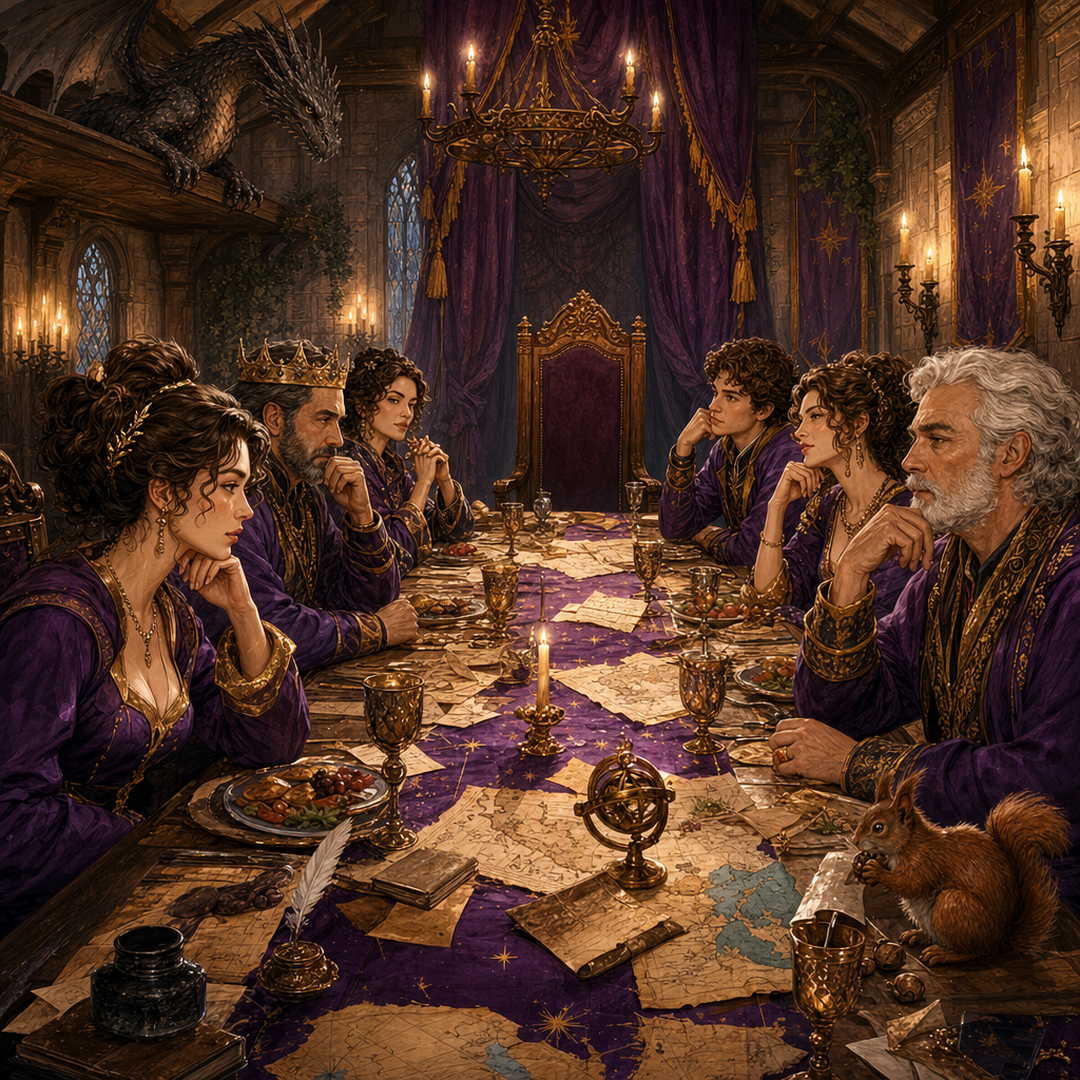
The Iron Throne is funny because it is such a silly prize and such a serious one. It is a chair made of swords, which should have been enough of a warning. It looks wildly uncomfortable. Nobody seems to enjoy sitting in it. Half the job involves listening to men with wet cloaks explain grain.
Still, everyone wants it.
That is succession drama at its sharpest. The object is never only the object. The crown is love. The chair is proof. The name is safety. The title is a parent finally saying, in public, “Yes, you.”
And because nobody in these stories can say the soft thing plainly, the soft thing becomes troop movement.
Game of Thrones plays the same tune with colder hands. Robert dies, Joffrey rises, Ned tells the truth in a room built for lies, and suddenly everyone’s family tree needs a priest, a lawyer, and a man with a very large map.
Stannis has the paperwork. Renly has the better parties. Cersei has nerve, children, and a talent for turning any room into a locked box. Jon Snow gets dragged into inheritance stress despite spending most of his early life trying to avoid eye contact with furniture in Winterfell.
The rewatch pleasure is partly knowing how tightly wound it all is. One secret sits under a marriage. One rumour sits under a war. One old oath, half remembered and badly timed, can tip a kingdom into screaming.
And yet the best succession drama never starts with the kingdom. It starts at the table.
A father makes a choice.
A child hears it as love.
Another child hears it as exile.
A spouse hears danger.
An adviser hears opportunity.
By supper, there are ravens.
That is why these stories keep working. Dragons are glorious, battles are grand, crowns are shiny in the way dangerous things often are. But the engine is painfully human. Everyone wants to be chosen. Everyone wants the old story to favour them. Everyone wants history to arrive with neat handwriting and no missing witnesses.
Westeros says: certainly. Here is one chair. Please ruin seven kingdoms about it.
And we settle in for the rewatch, knowing full well that someone is about to mistake pride for destiny again.
Terrible for the realm. Wonderful television.