Why You Can’t Finish Your Book: Make the Door Smaller

Finishing a book usually starts by shrinking today’s step until it feels possible again.
If you have ever searched “why can’t I finish my book?” with the energy of a person asking a wizard for a map, please come sit down.
Bring tea. Bring a snack. Bring the document you have been lovingly avoiding.
Here is the kind truth: finishing a book is not usually about becoming a totally different person with perfect discipline and a mysterious candle budget.
Finishing usually comes from making the next step small enough that your nervous system does not treat it like you have been asked to carry a cursed ring across several countries before lunch.
Very few people can look at the whole book and feel calm.
A whole book is enormous. It has scenes, feelings, turns, questions, endings, beginnings that suddenly look suspicious, and characters who were meant to be charming but are currently standing in a hallway doing nothing helpful.
No wonder your brain backs away slowly.
The dream is not too big.
Today’s doorway may just need to be smaller.
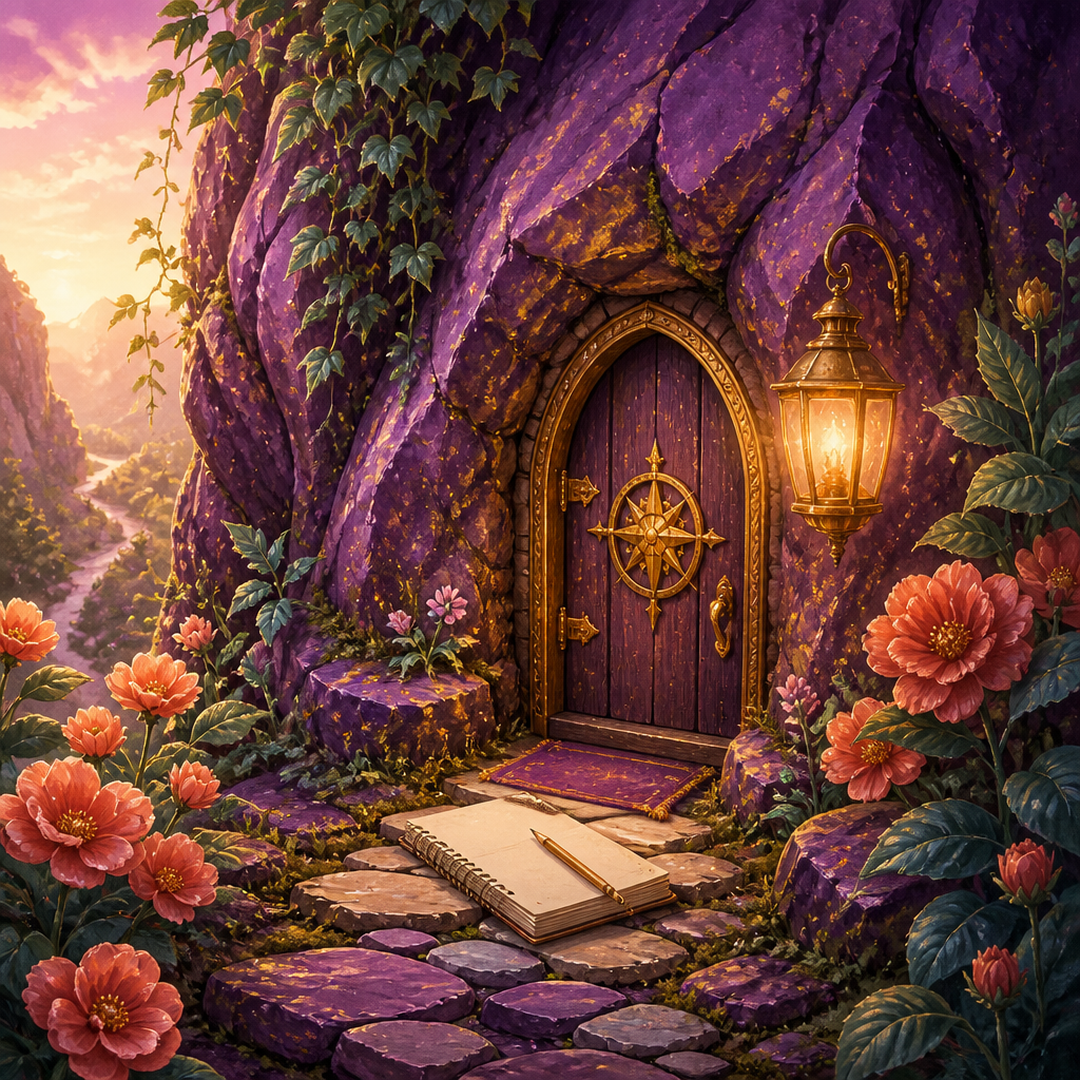
Think of every big story quest you love. Nobody wins because they stare at the mountain and say, “Excellent, I shall now complete the entire destiny.”
They get to the next inn. The next road. The next conversation. The next small, muddy, inconvenient bit.
That is how books get finished too.
Not by writing the book today.
By writing the tiny next bit.
A tiny next bit is not “finish chapter twelve.” That might still be a dragon wearing a hat.
A tiny next bit sounds like:
- Write the next three lines of dialogue.
- Describe the room with only three details.
- Get the character from the door to the table.
- Write the messy version of the moment you are avoiding.
- Figure out what the character wants in this one scene.
- Add one sentence that makes the problem worse.
That counts.
It really does.
Writers are very good at moving the finish line until it disappears into fog. You write a page, then think, “Well, that barely matters.” Rude. That page was a brick. Bricks are how castles happen.
If you are stuck, your next step is probably too large, too vague, or secretly three steps wearing one coat.
“Fix the middle” is not a step. That is a weather system.
Try this instead: find the next visible action.
What is the very next thing someone does, says, notices, hides, regrets, wants, refuses, remembers, or misunderstands?
Write that.
Badly, if needed. Plainly, if needed. With brackets and notes to yourself, if needed. A draft is allowed to arrive wearing mismatched socks.
And if you do not know what happens next, ask a smaller question.
Not: “How do I make this book brilliant?”
Try:
- What is the most uncomfortable thing this character could hear right now?
- What would make this moment harder?
- What secret is being protected here?
- What would happen if someone told the truth one minute too early?
- What is the simplest next move?
Small questions open doors.
Big questions often sit on your chest like a dramatic cat.
Also, please release yourself from the idea that you must feel inspired before you continue. Inspiration is lovely, but it is not always punctual. Sometimes it arrives after you have written four ordinary sentences and made a sandwich.
Momentum is built by keeping promises so small they almost feel silly.
Ten minutes.
One paragraph.
One exchange.
One note about the ending.
One tiny next bit.
Then stop while you still know the next crumb on the trail. Leave yourself a note like, “Tomorrow: she finds the letter under the blue mug.” Future you deserves a handrail, not a locked maze.
If you cannot finish your book, you are not broken. You are probably looking at the whole mountain when what you need is one step with a lantern.
Your dream can stay big.
Today can be small.
That is not giving up on the book.
That is how you walk it home.